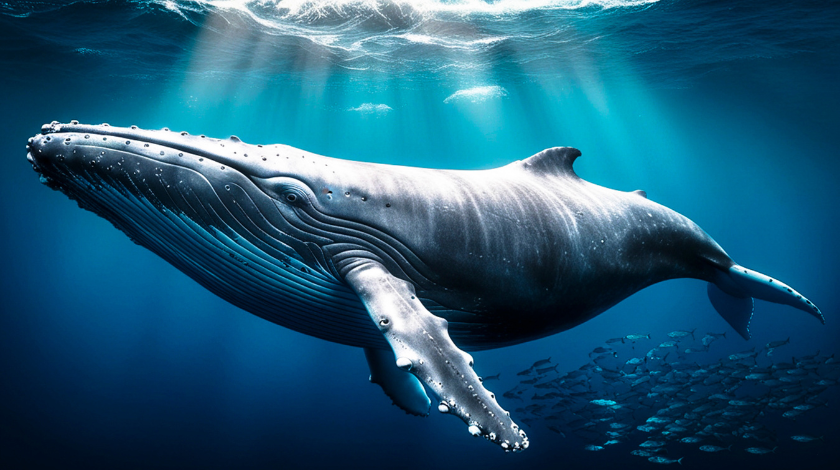
When you think about the most impressive animals on our planet, your mind probably goes to tigers, elephants, or maybe dinosaurs from long ago. But here’s something that might surprise you: the biggest animal that has ever lived is not a dinosaur. It’s not a giant lizard or some extinct monster from millions of years ago. Instead, it’s a creature that is alive right now, swimming in our oceans today. The blue whale holds the title of being the largest animal ever to exist on Earth, and honestly, the more you learn about this incredible creature, the more amazed you become.
I remember the first time I truly understood just how massive a blue whale is. I was watching a nature documentary, and they showed a blue whale alongside a school bus. The whale made the bus look like a toy. It wasn’t just the visual comparison that struck me, but the realization that this enormous creature was eating tiny shrimp-like organisms. This contradiction seemed almost impossible until I learned more about how these whales actually feed and survive. Today, I want to share with you everything that makes blue whales so remarkably large and why they deserve their title as the biggest animal in the world.
Understanding What We Mean by “Biggest”
Before we dive deep into talking about blue whales, it’s important to understand what we actually mean when we say “biggest.” This might seem obvious, but there’s more to it than you might think. When we talk about the size of animals, we can measure in different ways. Some people talk about length, meaning how long the animal is from head to tail. Others focus on weight, which tells us how heavy the animal is. Then there’s volume, which measures how much space the animal takes up in three dimensions. Sometimes even height matters, especially when we’re talking about land animals.
For most marine animals like whales, we use a combination of length and weight to determine which is biggest. A blue whale might not be the tallest animal, but when you consider both its length and weight together, nothing on Earth compares. If we were just talking about height, the giraffe would win, or possibly the ostrich. But when we talk about overall size and mass, the blue whale absolutely dominates. This is why scientists and marine biologists agree that the blue whale is unquestionably the largest animal ever to exist on our planet.
The Blue Whale: Nature’s Massive Marvel
Let me tell you about the blue whale in detail because the numbers are simply staggering. An adult blue whale can reach lengths of up to one hundred feet long. That’s roughly the length of three school buses parked end to end. Some of the largest whales ever recorded have been even longer than that. When we talk about weight, adult blue whales typically weigh between one hundred and fifty to two hundred tons. To put that in perspective, that’s equivalent to about thirty-three African elephants all combined into one animal. The largest blue whale ever recorded, a female, weighed approximately one hundred and ninety tons.
What really gets me thinking is that these enormous creatures grow from babies that are already about twenty-five feet long at birth. They gain weight incredibly rapidly too. A baby blue whale can gain roughly two hundred pounds per day during its first year of life. That’s almost one pound every seven minutes. The mother whale produces milk that is so rich in fat and nutrients that the calf can drink up to fifty gallons per day. This rapid growth is necessary because blue whales need to reach a certain size to survive in the open ocean.
The heart of a blue whale is perhaps the most impressive organ in the animal kingdom. It can weigh as much as four hundred pounds, which is about as heavy as a grand piano. The arteries are so large that a human being could swim through them if the whale were somehow laid out on an operating table. I find it remarkable that despite having this enormous heart, a blue whale’s heartbeat can be as slow as five beats per minute. You could actually hear a blue whale’s heartbeat if you were underwater with specialized equipment from several miles away.
How Big is a Blue Whale Really? Breaking Down the Numbers
To really grasp how big a blue whale is, we need to look at the actual measurements and think about what they mean in practical terms. The average adult blue whale measures about eighty feet in length, though they can grow significantly longer. That’s longer than two full-size pickup trucks parked bumper to bumper. The tail of a blue whale, called the flukes, can be as wide as thirty feet across. This tail is what propels the whale through the water with incredible power, allowing these massive creatures to swim at speeds of up to twenty miles per hour.
The mouth of a blue whale is absolutely enormous. The lower jaw alone can weigh as much as a car. Inside the mouth, instead of teeth, blue whales have structures called baleen plates. These are like long, thin combs made of a material similar to our fingernails. There can be between two hundred and thirty and five hundred of these baleen plates on each side of the mouth. When I first learned about this feeding mechanism, I was fascinated by how these enormous animals had essentially evolved to eat some of the tiniest creatures in the ocean.
The total blood volume in a blue whale is approximately five to six tons. That means if you collected all the blood in a blue whale’s body, it would weigh as much as an elephant. The tongue alone can weigh between two and four tons, and it’s such a massive organ that thirty people could stand on top of it without it feeling crowded. When we talk about the skin, a blue whale’s skin is typically about one foot thick, and beneath that layer lies a blubber layer that can be up to eighteen inches thick. This blubber is what keeps the whale warm in the cold ocean waters and provides energy reserves.
Comparing the Blue Whale to Other Large Animals
Now that we understand just how massive blue whales are, let’s compare them to other large animals on Earth. This comparison really helps put things into perspective. An African elephant, which is the largest land animal, weighs about thirteen thousand pounds on average. That sounds impressive until you realize that a blue whale weighs between three hundred and four hundred thousand pounds. If you lined up seventeen elephants in a row and stacked them on top of each other, you might come close to the weight of one blue whale.
The giraffe is the tallest animal on Earth. An adult male giraffe can reach heights of eighteen feet tall. However, a blue whale’s length of eighty to one hundred feet makes the giraffe look small by comparison. If a giraffe stood next to a blue whale laid out on the ground, the giraffe would only reach to about the whale’s middle section. The largest dinosaur we know about, the Argentinosaurus, was probably in the same size range as the largest blue whales, somewhere around one hundred feet long and possibly weighing up to one hundred tons. Scientists believe the blue whale might actually be larger than most estimates of the largest dinosaurs.
When we compare the blue whale to other marine animals, the differences become even more dramatic. A great white shark, one of the most feared predators in the ocean, can reach lengths of twenty to thirty feet and weigh up to five thousand pounds. The blue whale is roughly three times longer and weighs about sixty times more. Even other whale species pale in comparison. A sperm whale, which is the second largest toothed whale, can reach lengths of sixty feet and weigh about forty tons. This is substantial in its own right, but still significantly smaller than a blue whale.
The Evolutionary Story Behind the Blue Whale’s Size
You might be wondering why blue whales evolved to become so incredibly large. This is where evolutionary biology becomes truly interesting. There are several interconnected reasons for why blue whales grew to such enormous proportions. First, there’s something called Bergmann’s rule, which suggests that animals in colder environments tend to be larger. Blue whales live in some of the coldest waters on Earth, particularly in the Antarctic. A larger body mass helps maintain internal body temperature more effectively because there’s less surface area relative to the total body volume.
Another major factor is the availability of food in the ocean. The Antarctic waters where many blue whales live are incredibly rich with krill, which are small shrimp-like creatures. There are literally billions of tons of krill in Antarctic waters. Blue whales evolved their massive filter-feeding apparatus specifically to take advantage of this abundant resource. A large body size allows a whale to consume enormous quantities of krill in a single feeding session, maximizing energy intake. During feeding season, a blue whale can consume up to four tons of krill per day.
There’s also an advantage to size when it comes to deep diving and long migrations. Larger animals have better insulation and can store more energy as fat reserves. Blue whales migrate thousands of miles each year, traveling between polar feeding grounds and tropical breeding grounds. The energy requirements for such journeys are enormous, and a larger body size with extensive fat reserves makes these migrations possible. Additionally, a larger size provides some protection from predators. While adult blue whales have virtually no natural predators, larger size still would have been advantageous when their evolutionary ancestors were facing different predation pressures.
Where Blue Whales Live and How They Survive
Blue whales are found in all the world’s oceans, but they prefer cold, deep waters that are rich in food. The Antarctic is where the majority of blue whales spend their feeding season, roughly from November to March. During this time, they take advantage of the massive krill blooms and gain enormous amounts of weight. The temperate and tropical waters are where blue whales breed and give birth, typically during December through January. This migration pattern is one of the longest journeys undertaken by any mammal on Earth.
The cold waters where blue whales feed contain some of the richest ecosystems on the planet. The nutrient-rich waters upwell from the deep ocean, bringing essential minerals to the surface where sunlight penetrates. This sunlight allows phytoplankton to grow in enormous quantities. These tiny plants form the base of the food chain and support countless krill that blue whales depend on. Without this specific oceanographic pattern, blue whales could not exist in their current form.
Blue whales are currently listed as endangered, though their populations are slowly recovering from the brink of extinction. In the early nineteen hundreds, there were estimated to be three hundred thousand blue whales in the world’s oceans. Whaling reduced these populations to just a few thousand by the time whaling was banned in nineteen eighty-six. Today, scientists estimate there are between ten thousand and twenty-five thousand blue whales remaining. This recovery is due to international conservation efforts, but these magnificent creatures still face threats from climate change, ship strikes, fishing net entanglement, and ocean pollution.
The Remarkable Feeding Mechanism of the Blue Whale
I find the way blue whales eat absolutely fascinating because it seems almost counterintuitive that such an enormous animal would feed on creatures so tiny you could barely see them with your naked eye. Blue whales are filter feeders, which means they have evolved a unique system to capture massive quantities of krill from the water. When a blue whale feeds, it opens its enormous mouth and lunges forward through a concentration of krill. The whale’s mouth can expand to hold enormous volumes of water, up to five thousand gallons in a single gulp.
Once the whale has taken in all this water and krill, it closes its mouth and begins forcing the water out through the baleen plates. These baleen plates act like a sieve or strainer, allowing water to pass through while trapping the krill inside. After the water is expelled, the whale uses its massive tongue to push the concentrated krill toward the back of its throat where it swallows them. The whole process happens in seconds, and a single feeding lunge can result in consuming thousands of individual krill.
During the feeding season, blue whales can consume between three and four tons of krill per day. This enormous consumption is necessary because krill, while abundant, is not very energy-dense compared to fish or larger prey. The whale needs to consume massive quantities to gain enough energy to fuel its enormous body and build up fat reserves that will sustain it during the lean months when it’s migrating and breeding. It’s estimated that blue whales can gain up to fifty tons of body weight during a feeding season that lasts only about four months. This is why they spend most of their time in the polar regions where krill is plentiful.
Fascinating Facts About the Largest Animals
There’s something truly remarkable about learning specific facts about blue whales that really drives home just how exceptional these creatures are. For instance, the brain of a blue whale can weigh as much as fifteen pounds, making it the largest brain in the animal kingdom. However, proportionally, the brain is not the largest relative to body size. Dolphins and humans actually have larger brain-to-body ratios. Nevertheless, the absolute size of a blue whale’s brain is impressive, and scientists believe blue whales are highly intelligent creatures capable of complex communication and social behaviors.
The calls that blue whales make are the loudest sounds produced by any living creature. Their vocalizations can reach volumes of one hundred and eighty-eight decibels underwater. To put that in perspective, a jet engine produces roughly one hundred and forty decibels in air. Blue whales use these powerful calls to communicate with other whales across vast distances, potentially communicating with other whales thousands of miles away. Scientists still don’t completely understand all the functions of these calls, but they likely serve purposes including mating calls, identifying location, and maintaining social bonds.
When it comes to reproduction, the story is equally impressive. After a gestation period of approximately three hundred and thirty days, a female blue whale gives birth to a single calf. That calf is born about twenty-five feet long and weighs up to five thousand pounds. The mother nurses this calf for about seven months, during which time the calf grows incredibly rapidly. A newborn blue whale calf gains weight at a rate of about two hundred pounds per day during nursing. After weaning, the calf remains with its mother for about one year to learn migration routes and feeding techniques before becoming independent.
Blue Whales in Human Culture and Science
Throughout human history, whales have captured our imagination and inspired wonder. Blue whales, being the largest animals ever to exist, hold a special place in human culture and science. In many indigenous cultures, whales are considered spiritual beings worthy of respect and protection. The Maori people of New Zealand view whales as sacred ancestors. Japanese whaling culture has thousands of years of tradition. However, modern conservation efforts have shifted many cultures toward appreciating whales as scientific wonders rather than just resources to be exploited.
In the scientific community, blue whales serve as subjects for studying everything from marine ecology to evolutionary biology to bioacoustics. Researchers use photographs, satellite tags, acoustic monitoring, and genetic analysis to study blue whale populations and behaviors. This research has revealed that different populations of blue whales actually have distinct dialects in their vocalizations, much like different human cultures have different languages. Scientists have documented individual whales by recognizing unique patterns on their bodies and can track them throughout their lives.
Blue whales have also become ambassadors for ocean conservation. Their impressive size and graceful nature make them appealing subjects for documentaries and educational programs. When people learn about blue whales, they often become more interested in protecting the oceans that these creatures depend on. This increased awareness has helped drive support for marine protected areas, pollution reduction initiatives, and climate change mitigation efforts. In many ways, blue whales serve as a window into understanding the health and beauty of our entire marine ecosystem.
Modern Threats and Conservation Efforts
While blue whales are no longer hunted commercially, they still face numerous threats in the modern world. Ship strikes are a significant problem, particularly in busy shipping lanes where large vessels pass through areas where blue whales migrate and feed. When a large ship traveling at high speed strikes a whale, the whale often dies from the impact. Some researchers estimate that ship strikes kill dozens of blue whales every year in certain regions. Efforts are underway to establish alternate shipping routes and develop technology that allows ships to slow down or navigate around whales.
Ocean pollution is another serious concern. Plastic waste accumulates in the oceans, and while blue whales’ filter-feeding mechanism means they don’t typically ingest large amounts of plastic directly, the breakdown of plastic into microplastics can affect the entire marine food chain. Additionally, chemical pollutants like industrial waste and agricultural runoff accumulate in the ocean and can be harmful to whales. Climate change is also affecting blue whales by altering ocean temperatures and changing krill distributions, which directly impacts whale feeding patterns and nutrition.
Conservation organizations around the world are working to protect blue whales through various initiatives. Marine protected areas have been established in key feeding and breeding grounds where human activities are restricted. International agreements and laws protect blue whales from hunting and help enforce responsible shipping and fishing practices. Research programs monitor blue whale populations and study the impacts of various threats. Public education campaigns raise awareness about the importance of protecting these magnificent creatures. These efforts are making a difference, and blue whale populations have been slowly recovering over the past few decades.
The Continuing Wonder of Earth’s Largest Animal
Learning about blue whales and their status as the biggest animal in the world has genuinely changed how I think about our planet. These creatures represent the pinnacle of animal evolution and adaptation. They demonstrate what becomes possible when natural selection operates over millions of years. A blue whale is not just an animal; it’s a marvel of biological engineering, a wonder of marine ecosystems, and a reminder of the extraordinary diversity of life on Earth.
What strikes me most is that despite their enormous size, blue whales remain gentle creatures. They have no interest in hunting anything larger than tiny krill. They migrate thousands of miles, reproduce, raise their young, and navigate the oceans with apparent grace. They communicate across vast distances using the loudest calls in the animal kingdom. They are simultaneously simple in their diet and complex in their behaviors and intelligence. The more you learn about blue whales, the more you realize how much we still have to discover about these incredible animals.
CONCLUSION
The blue whale stands alone as the largest animal ever to exist on Earth. With lengths reaching one hundred feet and weights up to two hundred tons, these magnificent creatures dwarf all other animals, past and present. Their extraordinary size has evolved as an adaptation to their environment and food sources, allowing them to exploit the abundant krill populations in polar waters. Despite their massive proportions, blue whales are gentle filter feeders that consume tons of tiny organisms daily. While these whales face modern threats including ship strikes and climate change, conservation efforts continue to protect and recover their populations. Understanding and appreciating blue whales helps us recognize the incredible biodiversity of our oceans and the importance of protecting these magnificent creatures for future generations. The blue whale truly represents the remarkable possibilities of life on our planet.
FREQUENTLY ASKED QUESTIONS
Q: Is the blue whale bigger than any dinosaur?
A: Most estimates suggest that blue whales are comparable in size to the largest dinosaurs and possibly even larger than most of them. While some dinosaurs like the Argentinosaurus may have been similar in size, the blue whale is generally considered to be the largest animal ever to exist based on what scientists know about both modern whales and prehistoric creatures.
Q: How long can blue whales live?
A: Blue whales can live up to ninety years in the wild, though the average lifespan is typically between eighty and one hundred years. Scientists study growth layers in the baleen plates similar to how we study tree rings to determine the age of blue whales.
Q: Why do blue whales migrate?
A: Blue whales migrate between polar feeding grounds where food is abundant and tropical breeding grounds where they mate and give birth. The warm tropical waters are better for newborn calves, while the polar waters provide the massive quantities of krill necessary for the whales to gain weight and build energy reserves.
Q: Can blue whales be kept in captivity?
A: No, blue whales cannot be kept in captivity. They are far too large, intelligent, and require vast ocean ranges that no man-made facility could provide. Additionally, international laws protect blue whales and prohibit their capture.
Q: How many blue whales are left in the world?
A: Current estimates suggest there are between ten thousand and twenty-five thousand blue whales remaining in the world’s oceans. This represents a significant recovery from the low numbers of around five thousand in the nineteen seventies when whaling was still occurring.
Q: What sounds do blue whales make?
A: Blue whales produce complex vocalizations including moans, groans, and pulses. These calls can be heard by other whales from thousands of miles away and are used for communication, mating, and navigation.
Q: Do blue whales have any predators?
A: Adult blue whales have no natural predators. Calves may occasionally be attacked by orcas, but these incidents are rare. Humans were historically the only significant predator of blue whales through whaling.
Q: How much water can a blue whale’s mouth hold?
A: A blue whale’s mouth can expand to hold up to five thousand gallons of water during a single feeding lunge. The capacity is so large that multiple school buses could fit inside the whale’s mouth.