I remember the first time I visited the California coast about fifteen years ago. I was sitting on the rocks, watching these magnificent creatures interact with each other, and I honestly could not tell the difference between a sea lion and a seal. Someone next to me casually mentioned that one had visible ears while the other did not, and I realized how little I actually knew about these amazing animals. That moment sparked my curiosity, and over the years, I have done extensive research and even witnessed these creatures in different environments across the country.
Today, I want to share everything I have learned with you. The distinction between sea lions and seals is not just about academic classification. Understanding these differences helps us appreciate marine ecosystems better, contributes to wildlife conservation efforts, and simply makes watching these animals more enjoyable and meaningful. Whether you are a casual beach visitor, a student researching marine biology, or someone who genuinely loves wildlife, this comprehensive guide will help you understand what makes each of these pinnipeds unique.
Understanding Pinnipeds: The Marine Mammal Family
Before diving into the specifics of sea lions and seals, I think it is important to understand the bigger picture. Both sea lions and seals belong to a group called pinnipeds. The word “pinniped” comes from Latin and literally means “fin-footed.” This group includes seals, sea lions, and walruses. What ties them all together is that they are all marine or semi-aquatic mammals that have adapted their limbs into flippers for life in the water.
The evolutionary journey of pinnipeds is quite fascinating. Scientists believe that pinnipeds evolved from land-dwelling carnivores that gradually adapted to marine life over millions of years. This adaptation involved significant changes to their skeletal structure, muscle development, and sensory systems. Despite being aquatic animals, pinnipeds still retain many characteristics of their land-based ancestors. They breathe air through lungs, nurse their young with milk, and must return to land or ice to breed and give birth. This makes them quite different from fish, despite their aquatic lifestyle.
Physical Differences: The Most Obvious Distinctions
The Ear Situation
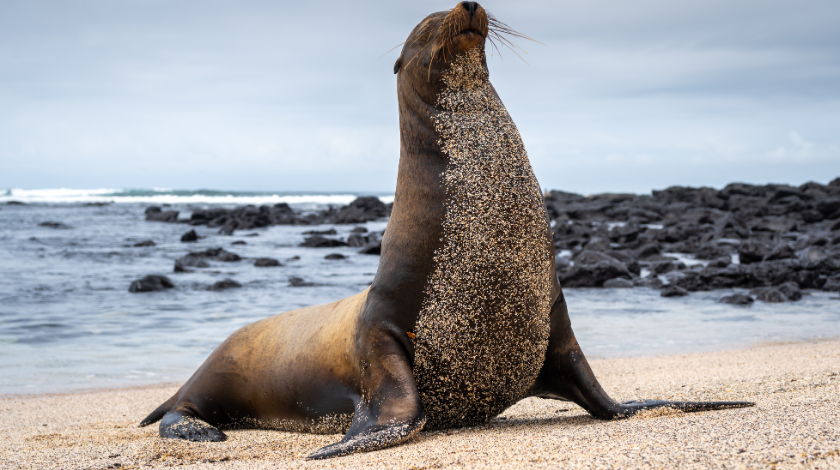
The most noticeable difference between sea lions and seals is their ears. Sea lions have external ear flaps called pinnae. These little flaps stick out from their heads and are quite visible. If you ever get a chance to observe sea lions, you will immediately spot these distinctive ears. They look almost comical when the animals are on land, and they actually play a functional role in their diving abilities.
Seals, on the other hand, have ear holes. That is right, they simply have openings in their heads without any external flaps. While this might seem like a minor difference, it actually reflects deeper anatomical variations in how these animals process sound and navigate underwater. The seal’s ear design is actually highly specialized for underwater hearing, where sound travels differently than it does in air.
Body Structure and Movement
If you watch sea lions and seals move on land, you will see immediately why the ear difference matters. Sea lions have longer front flippers that they can rotate under their bodies. This allows them to move their back flippers forward beneath their bodies and essentially walk, or even gallop, across land. It is quite impressive to watch. They can turn their heads almost completely around and move with surprising agility on shore.
Seals have shorter front flippers that cannot rotate as much. Instead of walking, seals move on land by contracting their bodies in a kind of undulating motion, similar to how a caterpillar moves. Some people describe it as a bouncing motion. This method is much less efficient on land, and seals spend less time out of water compared to sea lions. The seal’s body structure is much more optimized for water than for land.
Size and Body Shape
Sea lions tend to be more streamlined and somewhat more graceful looking, with relatively longer necks. Seals have stockier builds with shorter necks, giving them a somewhat rounder appearance. Sea lions generally range from about five to seven feet in length, though some species can be larger. Seals vary in size, but many common seal species are similar in length or smaller than sea lions.
How They Swim: Different Approaches to the Ocean
The differences in ear structure and body shape directly affect how these animals swim. Sea lions are like the underwater acrobats. They use their front flippers like arms to propel themselves through water with impressive maneuverability. They can make sharp turns, swim backwards, and exhibit incredible agility underwater. If you have ever watched videos of sea lions, you know they seem to dance through the water with almost playful precision.
Seals use a different technique. They move their rear flippers side to side, along with their posterior body, creating a fish-like undulating motion. This method is actually highly efficient for sustained swimming and diving to great depths. While seals might not have the same showy maneuverability as sea lions, they are equally impressive swimmers in their own right, and many seals are actually better deep divers than sea lions.
Behavioral Characteristics: Social and Individual Differences
Social Structure and Vocalization
Sea lions are generally more social animals. They often gather in large groups called colonies and communicate with each other through barking, growling, and various vocalizations. If you have ever been to a marine park or seen videos of sea lions, you have probably heard their loud barking. These animals are quite vocal and interactive. They are also more likely to engage in play behavior, which makes them interesting to observe and, frankly, entertaining.
Seals are generally quieter and less social in comparison. While they do gather together, they are more likely to be silent or make subtle vocalizations. In water, they communicate through calls and clicks, but on land, they are relatively quiet. This difference in vocalization actually tells us something about their evolutionary paths and social needs.
Intelligence and Training Ability
One reason sea lions are so commonly found in marine parks and zoos is that they are highly intelligent and responsive to training. They can learn complex behaviors, remember commands, and seem to enjoy interacting with humans. Their intelligence, combined with their playfulness, makes them ideal candidates for captive environments and educational programs.
Seals are also intelligent animals, but they are generally less inclined toward human interaction and training. They tend to be more independent and less interested in pleasing human handlers. This does not mean seals are less intelligent; it simply means their cognitive strengths are oriented differently.
Habitat and Geographic Distribution
Sea lions and seals have different distribution patterns across the world. California sea lions, which are the most commonly seen sea lion species in North America, are found along the Pacific coast. The Steller sea lion inhabits the northern Pacific. In other parts of the world, you find different sea lion species in various ocean regions.
Seals have a much broader global distribution. Harbor seals are found in the Northern Hemisphere in various coastal areas. Harp seals inhabit the Arctic regions. Leopard seals live in Antarctic waters. Weddell seals are also Antarctic residents. This wider distribution reflects seals’ greater adaptability to various marine environments.
Diet and Hunting Methods
Both sea lions and seals are carnivorous marine predators, but they have different hunting strategies. Sea lions primarily hunt fish like sardines, anchovies, and mackerel. They are active hunters that pursue their prey with remarkable speed and agility. Their hunting style is energetic and involves chasing prey through the water.
Seals also hunt fish and other marine animals like krill and squid, but many seal species specialize in different prey depending on their habitat. Leopard seals, for example, hunt other seals and penguins. Some seal species make very deep dives to hunt at depths where sea lions typically do not venture. Their hunting methods are often more strategic and less flashy than sea lions.
Reproduction and Life Cycle
Both sea lions and seals are mammals that must return to land to breed and give birth. Sea lion females typically give birth to a single pup after a gestation period of about nine months. The mother and pup establish strong bonds, and the pup nurses for several months before being weaned.
Seals follow a similar pattern with some variations. Some seal species have very short nursing periods (just a few weeks), while others nurse for longer. The bonds between seal mothers and pups can be strong, though seal mothers are sometimes less attentive than sea lion mothers. Different species have evolved different strategies based on their specific environments and food availability.
Conservation and Modern Challenges
Both sea lions and seals face modern conservation challenges. Overfishing reduces their food sources. Ocean pollution affects their health. Climate change alters their habitats and migration patterns. Additionally, many populations face threats from hunting, entanglement in fishing nets, and human-wildlife conflicts.
Currently, some sea lion populations are declining while others are stable or recovering. Similarly, seal populations vary significantly by species and region. Harbor seals, for example, have recovered well in many areas, while some other species remain threatened. Conservation efforts continue to focus on protecting breeding habitats, reducing human-caused deaths, and managing fishing practices to maintain food sources for these marine mammals.
Common Myths and Misconceptions
One of the biggest myths is that sea lions and seals are just different names for the same animal. This is absolutely not true. They are distinct groups with significant biological differences.
Another misconception is that seals are less intelligent or less capable than sea lions. This simply is not accurate. Seals are highly evolved marine mammals with capabilities perfectly suited to their environments. They are simply different from sea lions, not inferior.
Some people think that all pinnipeds have the same diet and hunting methods. In reality, different species have specialized in different food sources and hunting techniques based on their specific habitats.
People sometimes believe that seals cannot be as social as sea lions. While it is true that sea lions are generally more overtly social, seals do interact with each other and establish social structures, just in less obvious ways.
Conclusion: Appreciating Marine Diversity
After spending years learning about and observing these magnificent animals, I can confidently say that understanding the differences between sea lions and seals greatly enriches our appreciation for marine wildlife. These are not just subtle taxonomic distinctions. The differences between sea lions and seals represent millions of years of evolutionary adaptation to specific ocean environments and lifestyles.
Sea lions, with their external ears, long flippers, acrobatic swimming style, and social behavior, have adapted to be active, agile predators in temperate and subtropical waters. Seals, with their ear holes, shorter flippers, undulating movement, and more solitary nature, have evolved to be efficient, deep-diving hunters in diverse ocean environments ranging from temperate to polar regions.
Both groups deserve our respect and protection. The next time you see one of these animals, whether in the wild or in a documentary, you will now have a deeper understanding of what makes each of them special. You will appreciate not just what they look like, but how they live, hunt, interact, and survive in our oceans. This kind of understanding is the first step toward caring more deeply about marine conservation and the health of our ocean ecosystems.
Whether you are a wildlife enthusiast, a student, or simply someone curious about the natural world, I hope this guide has provided you with valuable information that changes how you think about sea lions and seals. The ocean contains so much wonder, and these marine mammals are just one example of the incredible diversity that deserves our attention and protection.
Frequently Asked Questions
Q: Can sea lions and seals interbreed?
A: No, sea lions and seals cannot interbreed. While they are both pinnipeds and share a common ancestor, they have diverged enough evolutionarily that they are separate groups. Their reproductive systems and mating behaviors are distinct, and they would never naturally encounter breeding opportunities.
Q: Which animal is faster in water?
A: Sea lions are generally more agile and can make quicker turns and movements. However, seals are excellent swimmers and some seal species can dive much deeper. If we are talking about pure speed over distance, it varies by species, but sea lions typically have the advantage in maneuverability while seals excel in endurance and depth.
Q: Why do sea lions have ears and seals do not?
A: This reflects different evolutionary adaptations. Sea lions evolved from ancestors that spent more time on land and needed good hearing in air. Their external ears help with this. Seals evolved to be more aquatic and their ear design is optimized for underwater hearing. Both designs are perfectly suited to their lifestyles.
Q: Are sea lions and seals endangered?
A: It depends on the species. Some populations are doing well, while others face threats. California sea lions, for example, have recovered from near extinction. However, some species of seals and sea lions remain threatened by overfishing, pollution, and climate change. Many conservation programs are working to protect these animals.
Q: Can humans train seals like sea lions?
A: Seals are intelligent but are generally less responsive to training and human interaction than sea lions. Sea lions are more social and seem to enjoy human interaction, making them easier to train. Seals are more independent and less motivated by interaction with humans.
Q: Where can I see sea lions and seals in the wild?
A: This depends on your location. In North America, California sea lions can be seen along the Pacific coast, particularly around rocks and piers. Harbor seals are found on both coasts. If you travel to other regions, you might encounter different species. Many zoos and marine parks also have these animals in captive settings where you can observe them.
Q: What is the lifespan of sea lions and seals?
A: Most sea lions live 15 to 20 years in the wild, though some can live longer in captivity. Seals typically live 20 to 40 years depending on the species, with some species living even longer. This variation reflects different evolutionary strategies and environmental pressures.
Q: Do sea lions and seals sleep?
A: Yes, both animals sleep, though they have adapted mechanisms to continue breathing while sleeping in water. Sea lions tend to haul out on land to sleep, while seals often sleep in the water using a technique where they surface regularly to breathe.