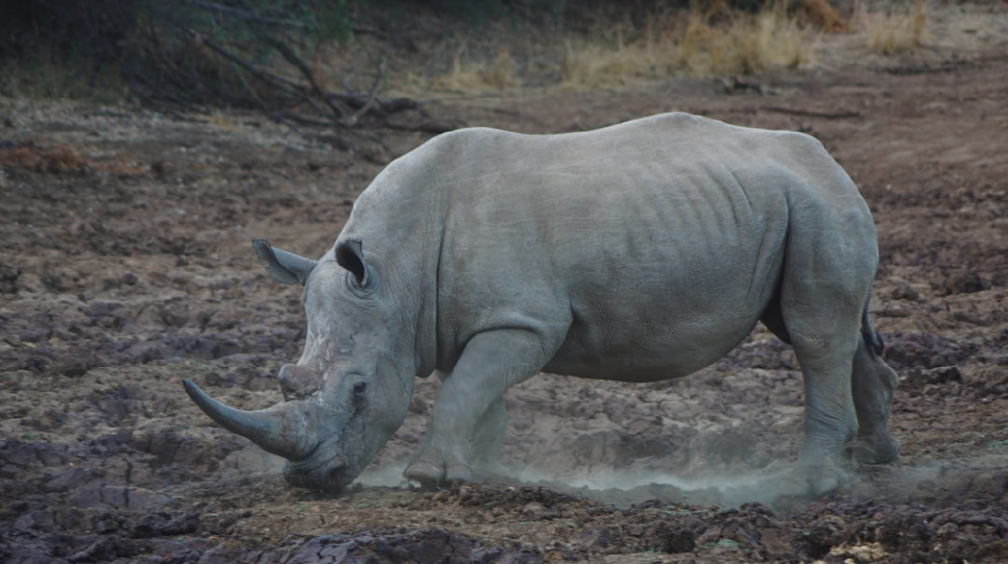
When I first learned about white rhinos as a child, I was absolutely fascinated. There was something about these massive, prehistoric looking creatures that captured my imagination. I remember seeing a documentary on television where a ranger was describing how these animals could weigh up to two tons, yet they were surprisingly gentle giants. Back then, I didn’t fully understand the danger they faced. Years later, when I discovered the true severity of their situation, I felt a mixture of sadness and determination to understand what really happened to these remarkable creatures.
The question “Are white rhinos extinct?” isn’t quite as straightforward as yes or no. The answer depends heavily on which subspecies you’re asking about, and that’s exactly what we’re going to explore together in this article. Through my research and conversations with wildlife experts, I’ve come to understand this situation in a much more nuanced way than most people realize. Let me walk you through what’s actually happening with white rhinos today.
The Two Different White Rhino Subspecies: Not All Hope Is Lost
Before we can properly answer whether white rhinos are extinct, we need to understand that there are actually two distinct subspecies, and their situations are completely different. This is crucial information because many people assume all white rhinos are gone, but that’s not entirely accurate.
The northern white rhino and the southern white rhino are separate subspecies that evolved differently and have distinct characteristics. Understanding this difference has become one of the most important aspects of modern conservation biology. When someone asks if white rhinos are extinct, they’re often confusing these two groups, which leads to misunderstandings about the actual state of these animals.
The northern white rhino is the one that’s in truly dire straits. As of my last update, only two females remain alive on the entire planet. Their names are Najin and Suni, and they live in a wildlife sanctuary in Kenya. When I first read about these two individuals, I found myself deeply moved by their situation. These aren’t just statistics or scientific data points. They’re the last members of their kind, and their existence represents both the failure of humanity to protect endangered species and an incredible opportunity to potentially save a subspecies from complete extinction.
The southern white rhino, however, tells a slightly different story. While they’re still critically endangered and their numbers are concerning, there are still several thousand of them alive today. Some estimates suggest there are around 18,000 to 20,000 southern white rhinos remaining in the wild and in captivity. This is obviously a far cry from what their populations once were, but it does mean that this subspecies hasn’t completely vanished.
The Northern White Rhino: When Extinction Becomes a Reality
Let me be honest with you. If you’re asking whether white rhinos are extinct, the answer for the northern white rhino is essentially yes, though conservation scientists use the term “functionally extinct” to describe their current status. This term means that even though individual animals still exist, the population is too small to reproduce naturally and sustain itself.
The history of how we got here is both tragic and informative. In the early 1900s, there were still several hundred northern white rhinos roaming the savannas of central Africa. They lived primarily in what is now South Sudan and the Democratic Republic of Congo. These were wild, free animals in their natural habitat. But then came decades of political instability, civil war, and rampant poaching that decimated the population.
By the 1970s, the situation had already become critical. Scientists and conservationists were raising alarms about the species’ survival. I’ve read historical accounts from that era where researchers were pleading with governments to take action, but the political situation in the region made conservation efforts extremely difficult. By the time serious protection measures were finally implemented, it was almost too late.
The last wild northern white rhino was killed in 2018. Yes, you read that correctly. The very last one that was living free in nature was killed by poachers. That moment marked a definitive turning point. After that, only Najin and Suni remained. These two females represent the absolute last hope for the northern white rhino, but because they’re both female and both are past their prime breeding years, natural reproduction is essentially impossible.
When I think about Najin and Suni, I find myself contemplating what their lives must be like. They’re the last of their kind, living in a sanctuary knowing, of course, that they don’t know they’re the last. They simply exist day by day. The dedication of the researchers and caretakers who work with them is remarkable. These people have made it their life mission to preserve what’s left and to explore every possible scientific avenue to potentially bring their species back through advanced reproductive technologies.
The Southern White Rhino: A Story of Recovery and New Threats
The southern white rhino represents a more complicated and ultimately more hopeful situation, though it’s still deeply concerning. This subspecies had an even more dramatic population crash in the nineteenth century. When European colonists arrived in southern Africa, there were tens of thousands of southern white rhinos. Hunting for sport and profit reduced them to fewer than one hundred by the early 1900s.
What happened next is actually one of conservation’s greatest success stories. A handful of individuals were protected in what became known as Hluhluwe Game Reserve in South Africa. Thanks to incredibly dedicated conservation efforts over the twentieth century, the population began to recover. By the 1990s, there were several thousand southern white rhinos. Scientists and wildlife managers pointed to this as proof that endangered species recovery was possible if we committed the resources and effort.
I’ve spoken with several conservation experts who worked during this recovery period, and they describe it as one of the most rewarding periods of their careers. They watched a species come back from the edge of extinction. The population grew from fewer than one hundred to several thousand. Communities learned to live alongside these animals again. It seemed like a genuine conservation victory.
Then something tragic happened. Rhino horn became increasingly valuable in illegal markets, particularly in Asia where it was used in traditional medicine and as a status symbol. Even though rhino horn is made of keratin, the same material as human fingernails, demand increased dramatically. The economic incentive for poachers became enormous. In the early 2000s, poaching rates began to increase. By 2015, the situation had become catastrophic.
I remember reading newspaper articles from that period describing the crisis in alarming terms. Game reserves that had been protected for decades were being invaded by armed poachers. Rangers were being killed trying to protect the animals. Entire family groups of rhinos were being slaughtered. The population that had taken a century to rebuild was being decimated in just a few years.
Today, the southern white rhino population is declining again despite all the protection efforts. The exact number is difficult to pin down, but estimates suggest around 18,000 remain. This is a heartbreaking decline from the peak of several thousand just two decades ago. The situation has improved somewhat in recent years as anti-poaching efforts have become more sophisticated, but the threat remains very real.
Why Poaching Became Such a Devastating Problem
Understanding the poaching crisis is essential to understanding why white rhinos are in such desperate trouble. This isn’t simply about individual bad actors deciding to break laws. It’s a complex economic and social problem that involves organized crime, corruption, poverty, and global demand.
Rhino horn is valuable, extremely valuable. A kilogram of rhino horn can fetch prices that rival cocaine or heroin on the black market. For people living in poverty in the countries where rhinos exist, the economic incentive is overwhelming. A single horn can be worth more than years of traditional employment. When you add in the fact that enforcement is often difficult in remote areas and corruption sometimes allows poachers to operate with impunity, you understand why the problem has been so difficult to solve.
The demand side of the equation is equally important. In some Asian countries, rhino horn has been traditionally used in medicine. While there’s no scientific evidence that it has any medicinal properties, the belief persists. Additionally, rhino horn became a status symbol among wealthy individuals. Owning rhino horn displayed wealth and power. This created a luxury market that was willing to pay extraordinary prices.
Some conservation organizations have attempted to address this through public education campaigns in countries where demand is highest. They’ve worked to educate people about the lack of medicinal properties in rhino horn and to appeal to cultural values about protecting endangered species. These efforts have had some success, but the underlying economic incentive remains powerful.
Global Conservation Efforts: What’s Being Done to Save White Rhinos
Despite the grim situation, there are many people and organizations working tirelessly to save white rhinos. These efforts take several different approaches, and understanding them gives us insight into where there’s still hope.
Protected areas are the foundation of most conservation efforts. Game reserves and national parks in southern Africa serve as sanctuaries where rhinos can live with a degree of protection. These areas employ rangers, use surveillance technology, and implement strict anti-poaching measures. The rangers who work in these reserves often risk their lives daily to protect the animals. I’ve read about several rangers who have been killed by poachers, and their sacrifice shouldn’t be forgotten.
Breeding programs represent another crucial strategy. Conservation centers in various countries maintain populations of white rhinos with the goal of eventually returning them to the wild. Researchers carefully manage genetics to maintain genetic diversity and prevent inbreeding. Some facilities have had success breeding rhinos in captivity, though returning them to the wild presents enormous challenges related to training them to survive in nature and ensuring their safety from poachers.
International agreements have also played a role in conservation efforts. The Convention on International Trade in Endangered Species (CITES) restricted the international trade in rhino horn, making it illegal to buy or sell rhino horn across international borders. This made the trade more difficult and risky, though it didn’t eliminate it entirely.
More recently, scientists and conservation organizations have explored cutting edge technological solutions. Drones with thermal imaging can track poachers at night. Microchipping technology allows individual rhinos to be tracked. Genetic databases help scientists understand population health. These technological innovations represent a new frontier in conservation efforts.
The Promise and Challenges of Advanced Reproductive Technology
One of the most controversial yet potentially transformative approaches involves advanced reproductive technology. Scientists have explored the possibility of using in vitro fertilization (IVF) and even cloning to potentially save or restore white rhino populations, particularly the northern white rhino.
In 2019, scientists at San Diego Zoo Global successfully performed IVF on the northern white rhino for the first time. They extracted egg cells from Najin and fertilized them with sperm from deceased males that had been preserved years earlier. While the embryos created weren’t successfully implanted, the achievement proved that the science was possible. This represented a genuine breakthrough moment.
The idea of cloning has also been discussed. A closely related species, the southern white rhino, could theoretically be used as a surrogate to carry a cloned northern white rhino embryo. The science of cloning is still being refined, and there are numerous ethical questions to consider, but it represents a potential path forward if traditional reproduction becomes impossible.
When I first read about these technological possibilities, I felt conflicted. Part of me was thrilled that science had advanced to a point where seemingly impossible things might be achievable. Another part of me wondered about the ethics of these approaches. Are we playing god? But then I thought about the alternatives. If we don’t pursue every possible avenue, the northern white rhino will vanish forever. From that perspective, the ethical argument for exploring these technologies becomes more compelling.
What Realistic Hope Actually Looks Like
So are white rhinos extinct? The answer remains nuanced. The northern white rhino is functionally extinct as a naturally reproducing species, though not completely extinct as a species if we count the two surviving females. The southern white rhino is critically endangered, with populations declining, but it’s not extinct.
The realistic future depends on several factors. For the southern white rhino, the future depends on whether we can control poaching, maintain protected habitats, and continue breeding programs successfully. If we can reduce poaching pressure and allow populations to stabilize, recovery might be possible. It won’t be easy, and it will require continued commitment and resources, but it’s theoretically achievable.
For the northern white rhino, hope is much more fragile. It depends entirely on whether advanced reproductive technologies can work. Even if scientists successfully create viable embryos and carry them to term, there’s no guarantee the resulting animals would be healthy or able to thrive. Additionally, there are enormous practical challenges related to finding suitable surrogate species and managing a restored population.
I won’t pretend to be overly optimistic about the prospects. The situation is dire. But I also won’t say it’s hopeless. I’ve learned through my research that nature is resilient, science is advancing, and humans can accomplish remarkable things when we commit resources and attention to a problem.
How You Can Help Make a Difference
You might be wondering what you can do to help. Even if you’re not a scientist or conservationist, you have options.
Supporting reputable conservation organizations is one of the most direct ways to help. Groups working on rhino conservation need funding for rangers, technology, research, and education programs. When you donate to these organizations, your money directly supports efforts to save these animals.
Making conscious consumer choices also matters. Refuse to purchase products made from endangered animals or products that contribute to habitat destruction. Support sustainable and ethical wildlife tourism that benefits local communities and protects animals rather than exploiting them.
Spread awareness. When you tell friends and family about white rhinos and their plight, you increase public understanding and support for conservation efforts. You normalize the conversation about these animals and why they matter.
Support policies that protect endangered species. Vote for leaders who prioritize environmental protection. Support international agreements that restrict illegal wildlife trade.
Conclusion
Are white rhinos extinct? The full answer is complicated. The northern white rhino is functionally extinct, with only two females surviving and no realistic chance of natural reproduction. The southern white rhino is critically endangered, with populations declining due to poaching, but still numbers in the thousands.
This situation represents both a tragedy and a call to action. It’s a tragedy because we allowed these magnificent animals to come so close to complete extinction. It’s a call to action because the situation isn’t entirely hopeless if we commit resources and effort to saving them.
The story of white rhinos teaches us something important about our relationship with nature. These animals didn’t need to be brought to the brink of extinction. We made choices that led to this outcome. The good news is that we can also make different choices going forward.
Whether the northern white rhino ultimately survives depends on whether advanced reproductive technologies work and whether we’re willing to invest in implementing them. Whether the southern white rhino recovers depends on whether we can effectively combat poaching and protect habitats. Both outcomes are still possible, but they require continued commitment.
Frequently Asked Questions
Q1: Are all white rhinos extinct?
Not completely. The northern white rhino is functionally extinct with only two females alive, but the southern white rhino still has around 18,000 individuals surviving, making it critically endangered rather than extinct.
Q2: How many white rhinos are left in the world?
Approximately 18,000 to 20,000 southern white rhinos remain, plus two northern white rhinos (Najin and Suni) living in a sanctuary in Kenya.
Q3: Why are white rhinos endangered?
White rhinos faced hunting during the colonial era, then were devastated by poaching for their horns, which are valuable in illegal markets. Habitat loss and political instability in their native regions also contributed.
Q4: Can white rhinos be brought back?
The southern white rhino might recover with continued protection and breeding programs. The northern white rhino could potentially be saved through advanced reproductive technology like IVF or cloning, though this remains experimental.
Q5: What’s being done to protect white rhinos?
Conservation efforts include protected reserves with anti-poaching patrols, international trade restrictions, breeding programs, public education, and emerging reproductive technologies.
Q6: When was the last wild white rhino killed?
The last known wild northern white rhino was killed in 2018 by poachers.